admin
admin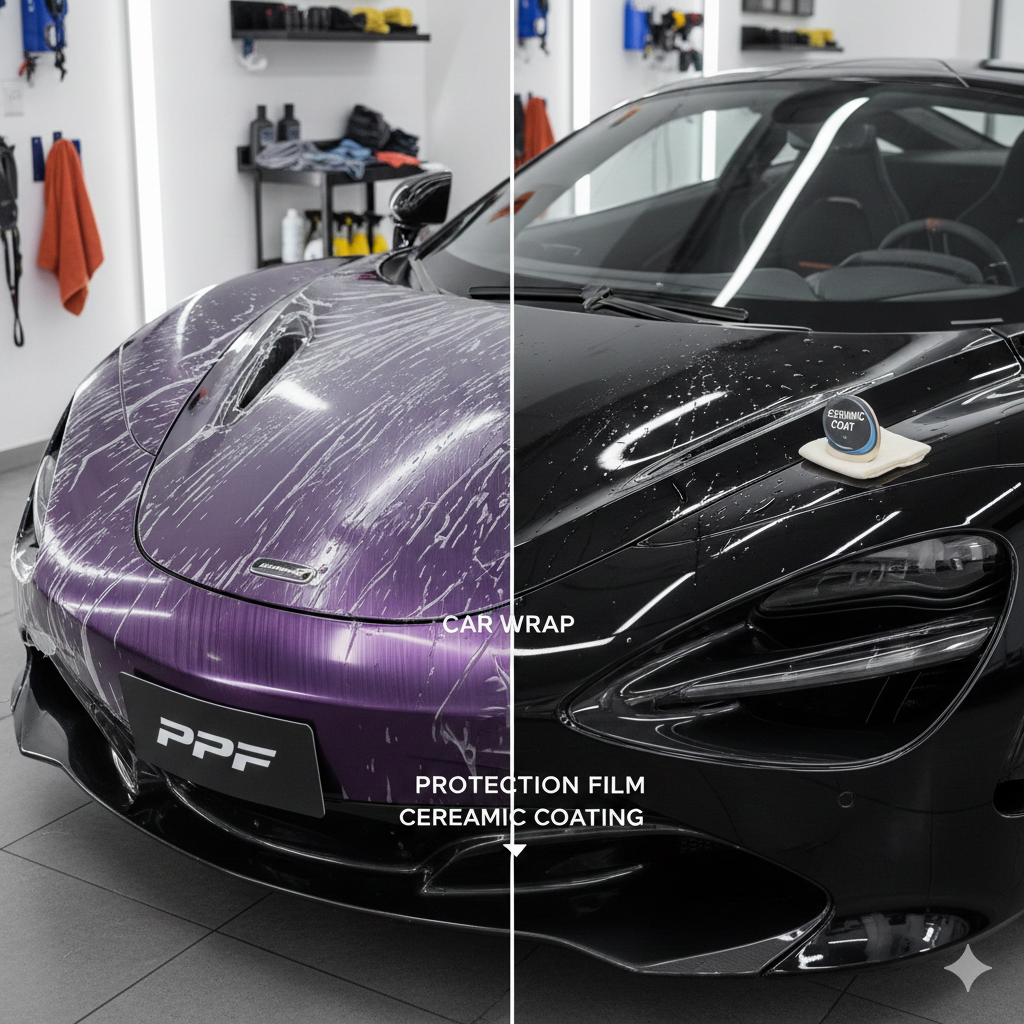
Thinking about ceramic coating for your car? It creates a hard, hydrophobic layer over your paint that reduces staining, eases cleaning, and preserves gloss much longer than wax or sealants. If you want durable protection that keeps your paint looking newer with less maintenance, a quality ceramic coating delivers the best balance of gloss and resistance to everyday contaminants.
This post Ceramic Coating Car walks through how ceramic coatings protect and enhance your vehicle, what to expect during application, and how to care for the coating so it lasts. You’ll learn practical trade-offs—cost, durability, and maintenance—so you can decide whether professional installation or a DIY kit fits your goals.
How Ceramic Coatings Protect and Enhance Vehicles
Ceramic coatings form a bonded, semi-permanent layer on your car’s clear coat that repels water, resists contaminants, and improves surface hardness. Proper application and layer thickness determine how long the protection and shine last.
Benefits of Professional Application
Professional installers prepare your paint before coating, using paint correction to remove swirl marks and bonded contamination. That prep ensures the coating bonds evenly; without it, you can trap defects under a long-lasting layer.
Technicians control application variables: ambient temperature, humidity, curing time, and precise product dosing. These factors affect chemical cross-linking and final durability, so a shop with experience typically delivers the advertised warranty and longevity.
You also get inspection and maintenance advice tailored to the product used. Professionals can record layer count, recommend safe washing techniques, and schedule top-up services when warranted.
Gloss and Hydrophobic Properties
Ceramic coatings increase surface hardness and refractive index, which deepens gloss and creates a mirror-like finish that resists dulling. The effect is most noticeable on darker paints and when multiple layers are applied.
The coatings are hydrophobic: water beads and runs off, carrying road grime and dust with it. That reduces wash frequency and lowers the risk of mineral etching from standing water.
Hydrophobicity also makes routine cleaning safer; contaminants release more easily, which reduces the need for aggressive scrubbing that causes marring. Expect improved water behavior immediately after cure, with peak repellency developing over days to weeks depending on the product.
Application Process and Long-Term Care
You need exact prep, controlled application, and routine maintenance to get durable protection and consistent gloss. Skip shortcuts: contamination control, correct flash time, and scheduled inspections determine longevity more than product marketing.
Surface Preparation Steps
Start by washing with a pH-neutral car shampoo to remove dirt and road film. Use a two-bucket method and microfiber wash mitts to minimize marring.
Decontaminate with iron remover and a clay bar or clay mitt to remove embedded fallout and rail dust. Rinse thoroughly and dry with a clean microfiber towel or forced-air dryer to avoid streaks.
Inspect paint for swirls, scratches, or oxidation. Correct defects with machine polishing before coating; coatings lock in whatever condition exists. Wipe the surface with an alcohol-based panel wipe or isopropyl solution (70–90% IPA diluted per product instructions) to remove oils and polishing oils.
Work in controlled conditions: shade, low humidity, and moderate temperature per product spec. Apply in small panels, follow the manufacturer’s flash/leveling time, and buff off residue with a fresh microfiber pad to ensure even bonding.
Aftercare and Maintenance Essentials
Wait the manufacturer’s recommended cure time before washing—commonly 24–72 hours for initial handling and up to 7 days for full cure. Avoid automated high-pressure washers or rotary brushes during the first two weeks.
Use pH-neutral shampoos and soft wash tools for weekly or biweekly cleaning. For bird droppings, tree sap, or bug splatter, remove contaminants promptly with a safe detailer spray and a microfiber towel to prevent etching.
Perform annual or biannual inspections to check bead behavior and hydrophobicity. Top-up sprays (boosters) compatible with your coating can restore slickness and prolong water repellency; follow dilution and application instructions precisely.
Avoid abrasive polishes or compound-level correction on coated areas unless necessary; if you must polish, reapply the coating to the corrected panel. Keep a small maintenance kit: two microfiber towels, a gentle detail spray, and the coating’s approved booster.